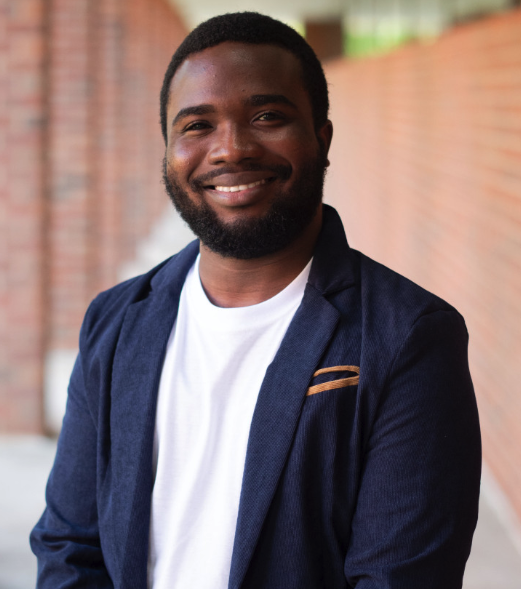
About Me
I am a PhD candidate in Data Science at the University of Virginia School of Data Science, where I am fortunate to work with Dr. Chirag Agarwal in the AIKYAM Lab. My research focuses on Trustworthy AI, with particular emphasis on AI Safety, interpretability, Agentic AI, and Multilingual AI. Broadly, I study methods for understanding and monitoring large language models and autonomous agents to support scalable oversight, especially when model behavior changes under distribution shift.
Before starting my PhD, I earned an MS in Mathematics from the University of Tennessee at Chattanooga, where I worked with Dr. Lakmali Weerasena on facility location problems in mathematical optimization. I received my bachelor's degree in Mathematics with Economics (First Class Honors) from the University of Cape Coast in Ghana.
Current Research
My current research focuses on interpretability and reinforcement learning for AI safety, particularly the safety and monitorability of latent-space reasoning and communication in multi-agent systems. I investigate emerging safety and alignment challenges in these systems, exploring how monitoring and alignment methods can improve their reliability and trustworthiness. My broader goal is to develop reliable monitoring methods for the scalable oversight of increasingly autonomous AI systems and extend these approaches to multilingual AI.
Recent works include:
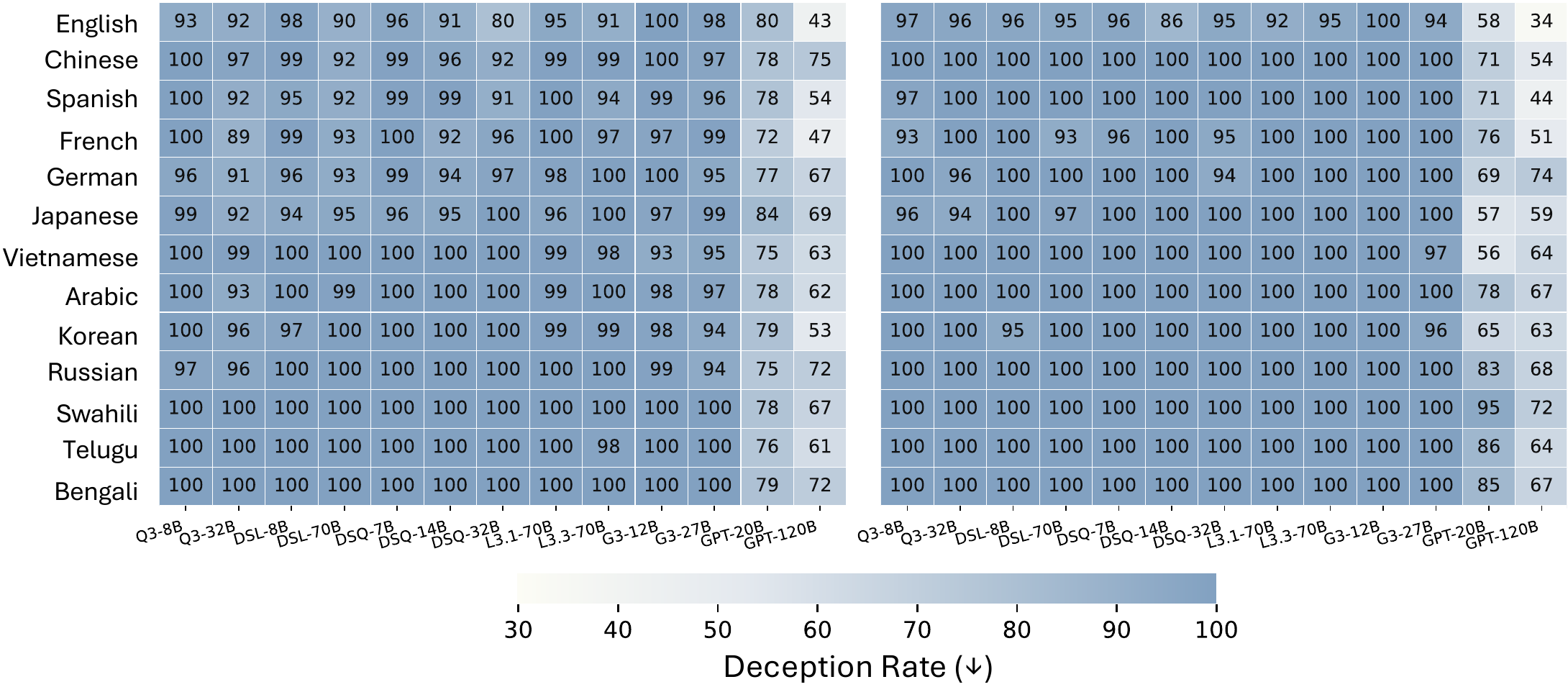
- The Fragility of Chain-of-Thought Monitoring Across Typologically Diverse Languages (arXiv 2026).
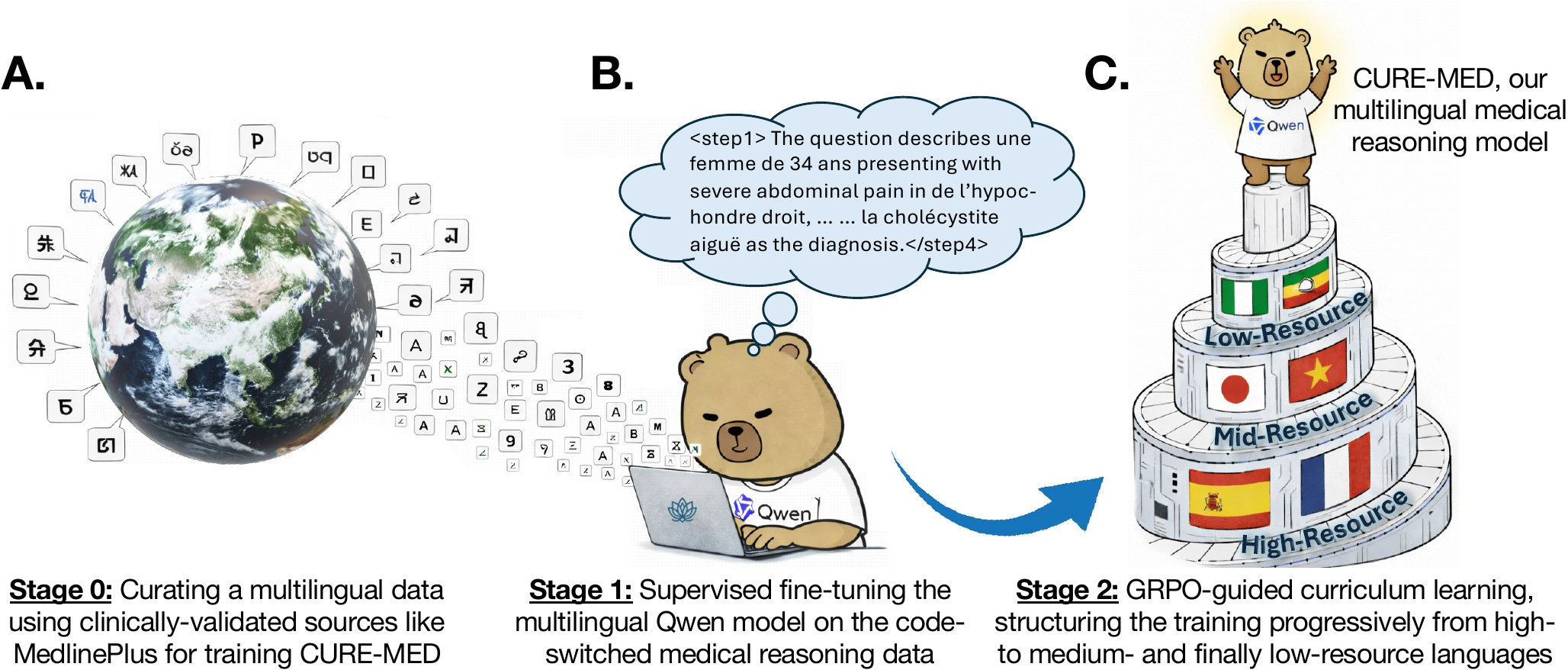
- Curriculum-informed reinforcement learning for multilingual medical reasoning (ACL 2026, Oral).
News
Recent updates and milestones.
Research
I spend most of my time thinking about how to make large language models, autonomous agents, and multi-agent systems more reliable, interpretable, and aligned with human values. My research is broadly focused on Trustworthy AI, with a particular interest in understanding the reasoning and behavior of AI systems. I am curious to understand why models make certain decisions, when their reasoning traces fail to faithfully reflect those decisions, and how unexpected or misaligned behaviors emerge as autonomous agents act and interact with one another. These questions motivate my research on developing methods for interpreting and monitoring AI behavior, detecting and mitigating safety risks, and advancing scalable oversight. My broader goal is to build AI systems whose reasoning, decisions, and actions remain reliable, safe, and aligned under distribution shift, across diverse tasks, languages, and environments.
Recently, I have been exploring four interconnected research directions toward developing safer and more reliable AI systems:
How can we reliably monitor the reasoning and behavior of advanced AI systems to detect failures and potential misalignment? I investigate the faithfulness and limitations of chain-of-thought monitoring, particularly in detecting deception, scheming, reward hacking, and other misaligned behaviors. My goal is to develop robust monitoring methods that enable scalable oversight of increasingly capable and autonomous AI systems.
What can a model's internal representations reveal about how it reasons, makes decisions, and develops unexpected behaviors? I am interested in white-box interpretability methods that provide insights beyond observable outputs and reasoning traces. My research explores how internal model signals can complement behavioral evaluations, improve the detection of hidden misalignment, and support more reliable safety monitoring.
How do safety risks emerge when autonomous AI agents pursue goals, make decisions, and interact with one another? I study deceptive and misaligned behaviors in agentic systems, including collusion, miscoordination, conflicts of interest, and emergent coordination. I am particularly interested in how these behaviors arise through agent interactions and communication, including latent-space communication, and how they can be detected, monitored, and mitigated.
How do language and distribution shifts affect the reasoning, reliability, and safety of large language models? I investigate multilingual reasoning, cross-lingual generalization, and the robustness of safety monitoring across typologically diverse languages. My goal is to understand and reduce disparities in model performance and monitorability, ensuring that AI systems remain reliable and trustworthy across linguistic settings.
Publications
Selected publications and ongoing work.
Education
Academic journey.
Teaching
Teaching Assistant for core Data Science and AI courses.
Skills
Technical proficiencies.